Hugād: A gād-abzār for Her, Not for Him
Hugād — jade green with gold botanical engravings. This is a product for women. Not "for couples." Not "unisex." Not a silicone echo of a male body, vibrating...
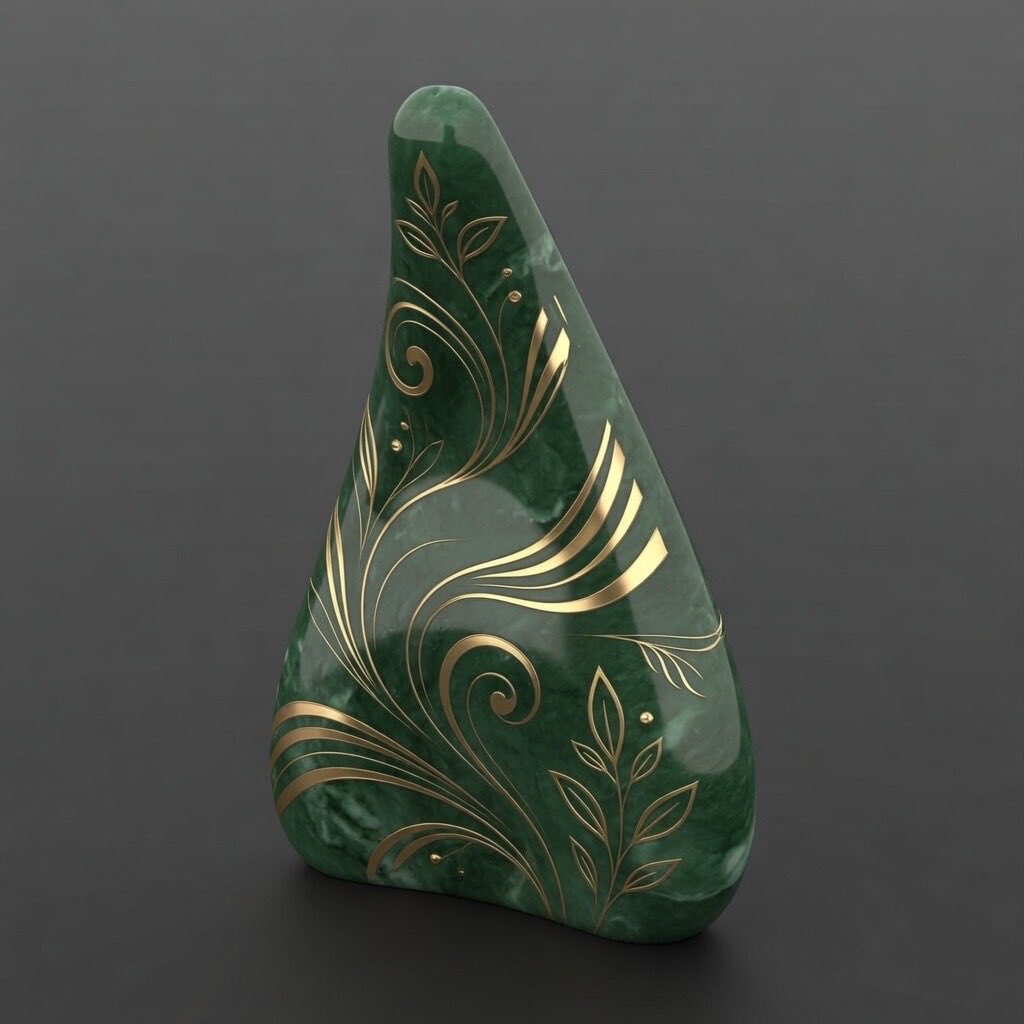 Hugād — jade green with gold botanical engravings.
This is a product for women.
Not “for couples.” Not “unisex.” Not a silicone echo of a male body, vibrating at three speeds. A gād-abzār — sex toy — designed from the first sketch around the female body and the female experience of pleasure. No penetration. No thrust. No moving parts at all.
The design argument
Walk into any sex-toy shop, online or offline, and look at the shelves. The overwhelming majority of what you see is shaped by one assumption: that pleasure is something done to a body by an object that pushes, pumps, sucks or penetrates. That assumption is a male assumption. It has been the default of the industry for a century, and it still is.
Hugād’s first product starts from a different premise. The clitoris has roughly eight thousand nerve endings and is the only human organ whose sole known function is pleasure. It does not need to be entered. It needs to be touched — with variation, with intelligence, with something that behaves more like a finger or a tongue than a drill.
So we built a device with no mechanical parts. No motor, no eccentric weight, no piston. The sensation is produced electro-tactilely: precisely shaped low-current pulses across the skin that the nervous system reads as touch, stroke, pressure, tickle. The waveforms can be sculpted. A caress is not a buzz. A tickle is not a tap. The hardware finally catches up to the actual vocabulary of the body.
Because there is nothing to spin or pump, the device is silent, wears out slowly, seals cleanly, and stops being a small appliance that happens to be intimate. It becomes something closer to what it should have been all along: an extension of a hand, or of a tongue.
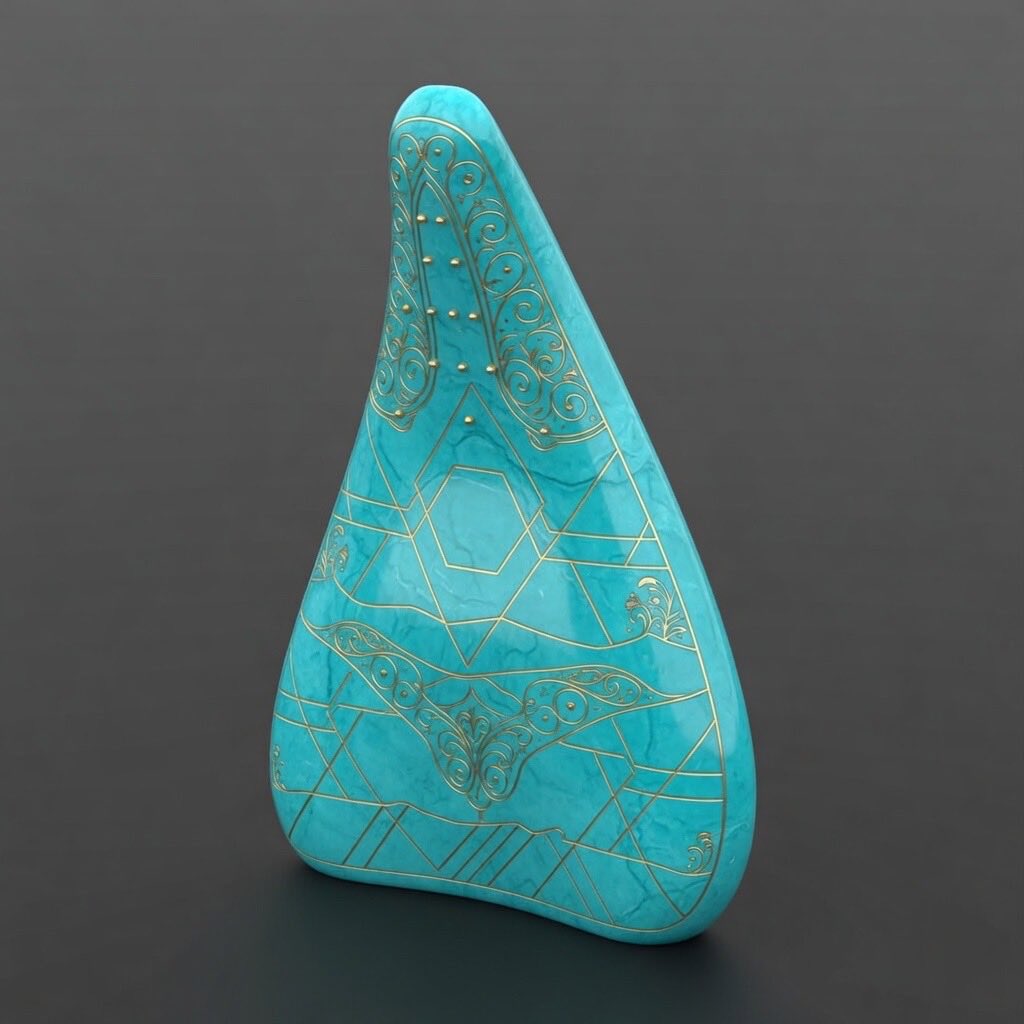 Hugād — turquoise with gold geometric arabesque engravings.
Why this, why now, why for Iranian women
Hugād — /HOGAAD/, good fuck in Pārsīg — is not a neutral product launched into a neutral market. It comes out of a specific moment and a specific history.
Iranian civil society has spent about five decades under a regime that treats women’s bodies as a site of state control. The hijab is the visible surface of a much deeper project: to sever people — and especially women — from their own nature, their own desire, their own language for desire. Woman, Life, Freedom is, among many other things, a refusal of that severance. It is the reclamation of the body as one’s own.
A product cannot carry a revolution. But a product can carry an argument, and it can put that argument on a shelf, in a drawer, in a hand. Building a non-penetrative, woman-centred gād-abzār is one such argument. It says: pleasure is not shameful, it is not male property, and the language for it does not have to be borrowed from a regime that denies it exists.
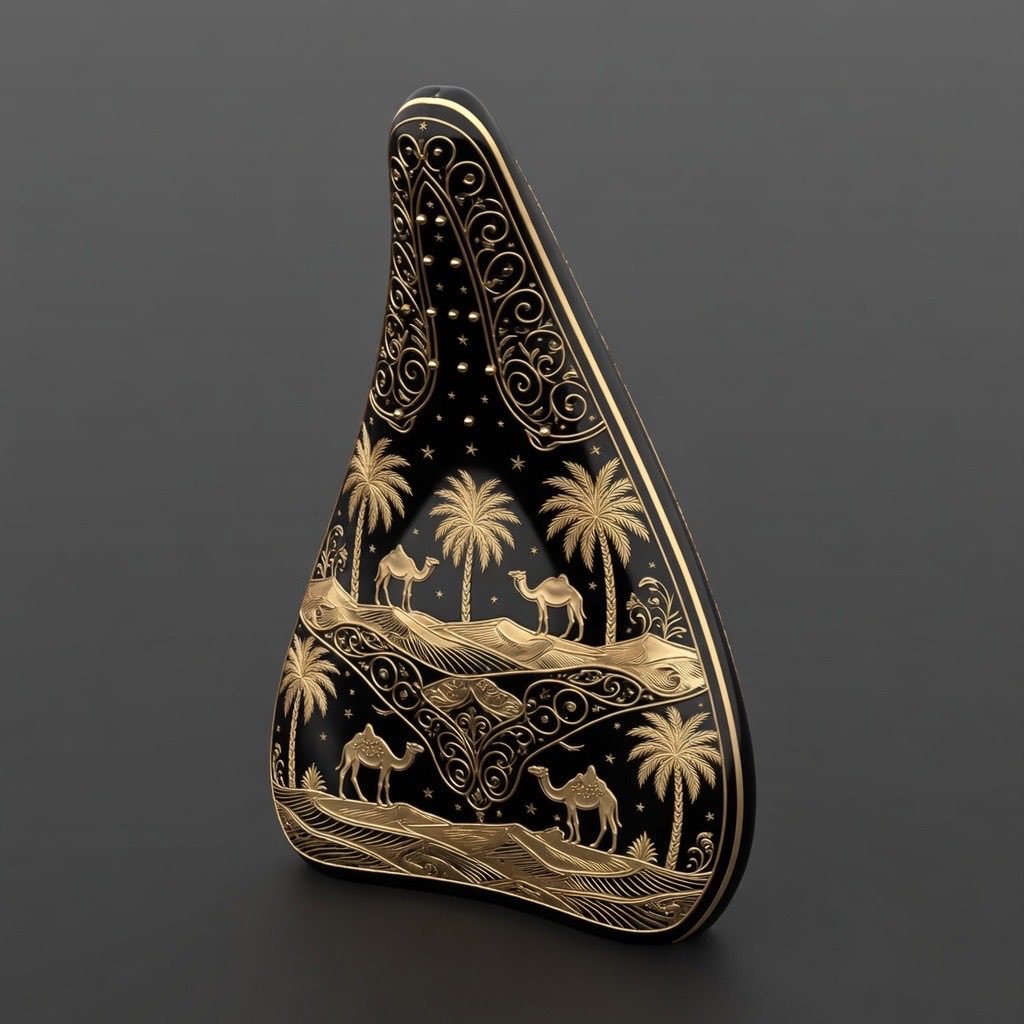 Hugād — black with gold desert scene engravings.
Where the product stands
At launch, Hugād will ship in two colours: ivory and black. Two quiet options, no novelty pink, no gimmick. A device you are meant to keep, not to hide. The device is past the concept stage. The electro-tactile core is working, the waveforms that reproduce touch, stroke and tickle are reproducible, and the form factor is settled enough to discuss in public — which is why I’m writing this.
What’s left is the boring, necessary work: industrialisation, certification, private-label manufacturing partners, packaging, distribution. None of it is glamorous. All of it is what separates a prototype from a product a woman can actually buy. Wish me luck!
The bigger frame
Hugād is one brand in a longer programme — a set of cultural and commercial projects aimed at reconnecting Iranians with their own nature after decades of engineered shame. Sex education. A contemporary vocabulary for the erotic. Products that respect the bodies they’re made for. The market is enormous and under-served, and the cultural case is, I think, obvious.
If any of this resonates — as a future customer, a collaborator, a manufacturer, or simply someone who wants to argue with the design choices — reach out. The shelves have been male for a long time. They don’t have to stay that way.